EQ Balance and Tonal Shaping in Mastering
The Purpose of EQ in Mastering
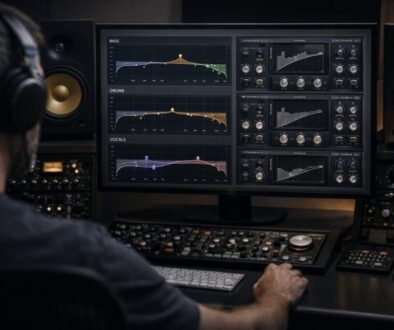
EQ Balance and Tonal Shaping in Mastering form the foundation of a polished, professional sound. Equalization at the mastering stage is about subtle refinement, not drastic correction. EQ Balance and Tonal Shaping in Mastering aim to ensure that every frequency band contributes harmoniously to the overall picture. The process adjusts broad tonal balance — clarifying the mids, tightening the lows, and adding air to the highs — to ensure consistency and translation across all playback systems. It’s the art of achieving cohesion without losing the mix’s original character.
Broad vs Surgical Adjustments
Unlike mixing, where EQ addresses individual instruments, mastering EQ focuses on the stereo image as a whole. EQ Balance and Tonal Shaping in Mastering rely on wide, gentle curves that enhance the mix globally. A subtle low-shelf cut can clean up muddiness, while a broad high-shelf boost brings brightness and air. Sharp, narrow adjustments are reserved only for specific issues such as resonant frequencies or harsh peaks. The goal is transparency — shaping tone without calling attention to the processing itself.
Balancing the Frequency Spectrum
A balanced master feels complete across the entire frequency range. In EQ Balance and Tonal Shaping in Mastering, each range has a distinct emotional function. The low end adds weight and stability, the mids carry warmth and detail, and the highs provide clarity and openness. When one area dominates, the entire mix suffers. Using high-quality linear-phase EQs helps maintain phase coherence, especially for subtle low-end and high-end corrections. Reference tracks are invaluable at this stage to calibrate your perception of balance and tonal density.
Low-End Definition and Control
The low end is often the trickiest region to master. Too much bass can overpower speakers, while too little leaves the mix feeling thin. EQ Balance and Tonal Shaping in Mastering emphasize precision — a gentle roll-off below 30 Hz cleans subsonic energy, and a small boost around 80 Hz can restore warmth if needed. It’s essential to check how these adjustments affect midrange clarity and overall punch. Controlled low frequencies form the foundation of a professional master, allowing the rest of the spectrum to breathe naturally.
Midrange Clarity and Emotional Presence
The midrange is where emotion and intelligibility reside. EQ Balance and Tonal Shaping in Mastering focus on balancing vocal and instrumental energy here. Cutting 200–400 Hz can reduce muddiness, while gently lifting 2–5 kHz enhances definition and presence. Overemphasizing this region can make the mix fatiguing, so subtlety is key. The goal is to make the midrange transparent and expressive — clear enough to carry detail, but smooth enough to remain pleasant at high playback levels.
High-End Air and Tonal Cohesion
The top end defines polish and modernity. A soft high-shelf boost between 10–16 kHz can add sheen, while dynamic EQ can control sibilance or excessive brightness. EQ Balance and Tonal Shaping in Mastering also involve ensuring that the high end complements the low end; both must feel connected, not separated. Mastering EQ should unify the entire frequency range into one coherent, fluid tone. When balance is achieved, the track feels open yet controlled — bright enough to sparkle, but never harsh or brittle.
Final Tonal Check
Before printing the final master, A/B compare against reference tracks at matched loudness to confirm that tonal balance translates well. EQ Balance and Tonal Shaping in Mastering should make the mix sound natural across speakers, headphones, and car systems. Avoid overcorrecting based on one playback environment. The hallmark of great mastering EQ is subtlety — each move should serve the music, not the meters. When done right, the result is a smooth, powerful, and emotionally engaging sound that retains the artist’s intent while meeting modern sonic expectations.