Low-End and Balance Control in Stem Mastering
The Foundation of a Solid Master
Low-End and Balance Control in Stem Mastering are essential for achieving depth, stability, and punch without muddiness. The low end forms the foundation of most mixes — it drives rhythm, supports harmony, and provides the emotional weight that connects with listeners. Low-End and Balance Control in Stem Mastering focus on managing bass frequencies across stems such as drums, bass instruments, and synths, ensuring they interact cleanly while maintaining power. Proper low-end management is one of the biggest factors separating amateur masters from professional, commercial-quality results.
Understanding the Low-End Spectrum
Before making adjustments in Low-End and Balance Control in Stem Mastering, it’s important to identify the main frequency zones: sub-bass (20–60 Hz), bass (60–120 Hz), and low mids (120–250 Hz). Each range carries a distinct purpose. The sub-bass provides depth and feel, the bass adds weight and definition, and the low mids connect the rhythm section to the rest of the mix. Overlapping these areas between stems — for instance, bass and kick drum — often causes masking, muddiness, or phase cancellation. Balancing these frequencies ensures clarity and consistent power across playback systems.
EQ Techniques for Clarity
In Low-End and Balance Control in Stem Mastering, equalization is the first step to clarity. High-pass filtering on non-bass stems removes unnecessary low-frequency buildup, freeing space for kick and bass fundamentals. Subtle EQ cuts around 200–300 Hz can reduce boxiness, while boosts between 80–100 Hz enhance warmth if the low end feels thin. Using linear-phase EQ prevents phase shifts between stems, maintaining coherence when summed. Always monitor adjustments in mono to verify balance and avoid conflicts that might disappear in stereo but cause problems on small speakers or streaming platforms.
Compression and Dynamic Balance
Compression controls energy flow and consistency in Low-End and Balance Control in Stem Mastering. For low-end stems, use slow attack times to preserve transient punch and medium release times to maintain groove. Apply gentle ratios (around 2:1) with minimal gain reduction — 1–3 dB is often enough. Sidechain compression is a valuable tool for balancing kick and bass; it ducks one signal slightly when the other hits, preventing low-frequency masking. This technique ensures rhythmic clarity and stability, allowing both elements to breathe within their own space.
Phase and Mono Compatibility
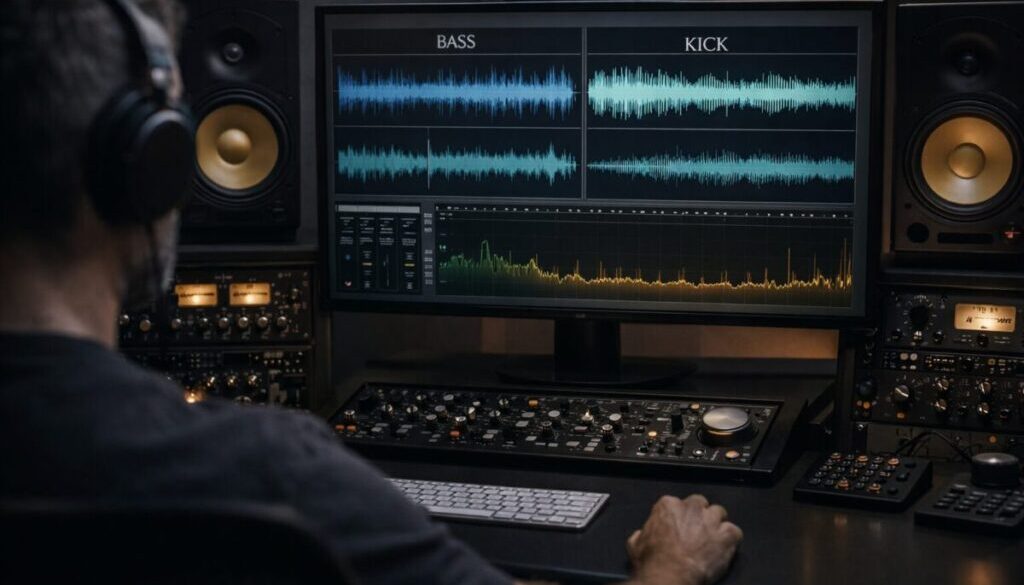
Phase alignment plays a major role in Low-End and Balance Control in Stem Mastering. Misaligned waveforms between bass and kick stems can cause frequency cancellation, resulting in weak or inconsistent lows. Always check phase relationships visually and by ear. If flipping phase on one stem tightens the low end, it was likely out of alignment. Keep sub frequencies mono — typically below 100 Hz — to maintain centered, powerful energy. This approach enhances playback stability on both stereo and mono systems while improving headroom for final limiting.
Balancing Across Stems
Perfect Low-End and Balance Control in Stem Mastering depends on how the low frequencies interact with the rest of the mix. Excessive bass can mask midrange clarity, while too little weakens the emotional impact. Compare low-end energy to professional reference tracks at matched loudness. If your master feels boomy or thin, adjust individual stems rather than the entire mix. Subtle gain staging, EQ shaping, and compression alignment across stems maintain both strength and control. The key is achieving balance — full-bodied and tight, never overpowering or undefined.
Final Low-End Check
Before printing the final master, Low-End and Balance Control in Stem Mastering require thorough evaluation on multiple playback systems. Test on full-range monitors, small speakers, and headphones. The bass should feel consistent — not disappearing on smaller systems or overwhelming on sub-heavy setups. A well-mastered low end delivers impact and emotion without compromise. When managed skillfully, low-end and balance control give the master authority, depth, and groove — the unmistakable foundation of a professional, genre-ready sound.